
Spring AC Tune-Up Checklist: 8 Things We Check Before Summer
A pre-summer tune-up is the cheapest insurance against a mid-July breakdown. Here's exactly what our technicians inspect — and what you can check yourself.
Why a spring tune-up matters more in Los Angeles
In most of the country, an AC tune-up is about catching problems before summer. In Los Angeles, it's about catching them before the heat waves — because June, July, and August in the San Fernando Valley mean your system will run 8–12 hours a day. A component that's "marginal" in spring will fail when you need the AC most.
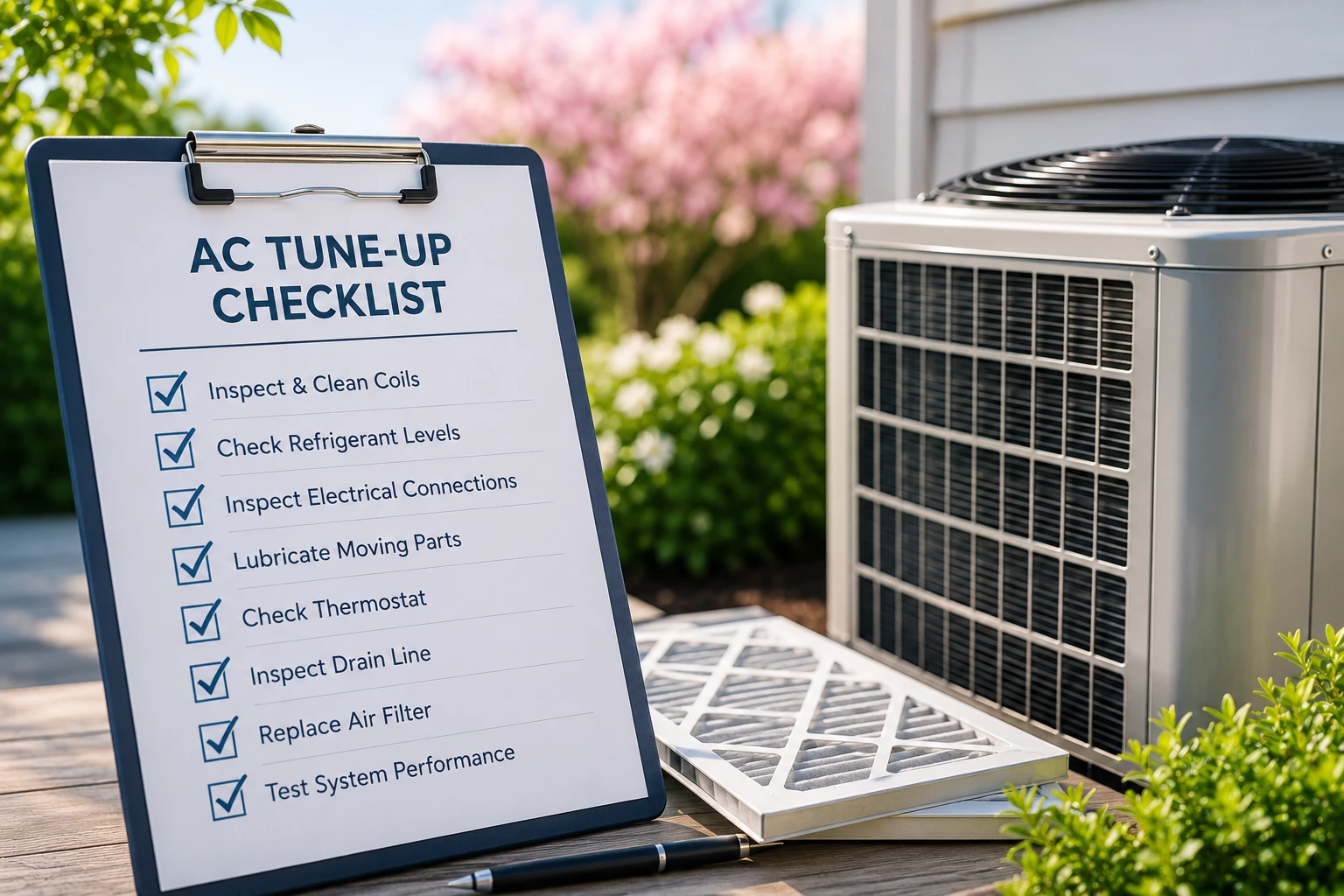
The 8 things we check on every spring tune-up
1. Refrigerant pressure and superheat
The refrigerant circuit is the heart of any AC system. Low refrigerant (from a slow leak) reduces capacity and efficiency significantly. We check operating pressure and calculate superheat and subcooling to confirm the system is correctly charged — not just "has some refrigerant."
2. Condenser coil condition
The outdoor coil accumulates cottonwood fluff, dog hair, and airborne debris over the winter. A coated coil can reduce system efficiency by 10–20%. We clean and rinse the coil on every tune-up visit.
3. Capacitor and contactor condition
Capacitors are the most common AC failure on hot days — they weaken with heat cycling and age. We test capacitance against rated spec. A capacitor at 80% of rated capacitance today will likely fail under peak summer load. We replace it now, not in July.
4. Evaporator coil and drain
Dirty evaporator coils freeze up (see our freeze-up article). Clogged condensate drains overflow and damage ceilings and walls. We inspect both and clear the drain line on every visit.
5. Blower motor amp draw
A blower motor drawing above-spec amps is running hot and will fail. We check amp draw and compare against the nameplate rating.
6. Electrical connections and safety
Vibration loosens electrical connections over time. Loose connections arc, which means heat and eventually failure. We check all service disconnect and air handler electrical connections.
7. Thermostat accuracy
A thermostat that reads 2°F high means your system runs 2°F longer than needed. We verify accuracy with a calibrated reference and adjust if needed.
8. Filter and airflow check
We end every tune-up by checking filter condition and measuring static pressure across the air handler — the only way to confirm the system has adequate airflow, regardless of what the filter looks like.
What you can check yourself
- Replace or wash the filter (monthly during heavy use)
- Clear 18" of clearance around the outdoor unit — trim back shrubs
- Confirm all supply and return registers are open
- Check that the condensate drain line isn't blocked (pour a cup of water to test flow)
Everything beyond that — refrigerant, electrical, coil cleaning — requires a licensed technician with the right equipment. Schedule your spring tune-up in March or April before the summer rush.
Ready to get started?
Free in-home consultation with any new or replacement HVAC system, or any service / repair over $200. We answer the phone 24/7.