7 Benefits of Upgrading to a Heat Pump in Los Angeles
If your AC and furnace are both getting old, replacing them separately isn't always the smartest move. Here's why so many LA homeowners are consolidating into a single heat pump system instead.
Why an upgrade beats a like-for-like replacement
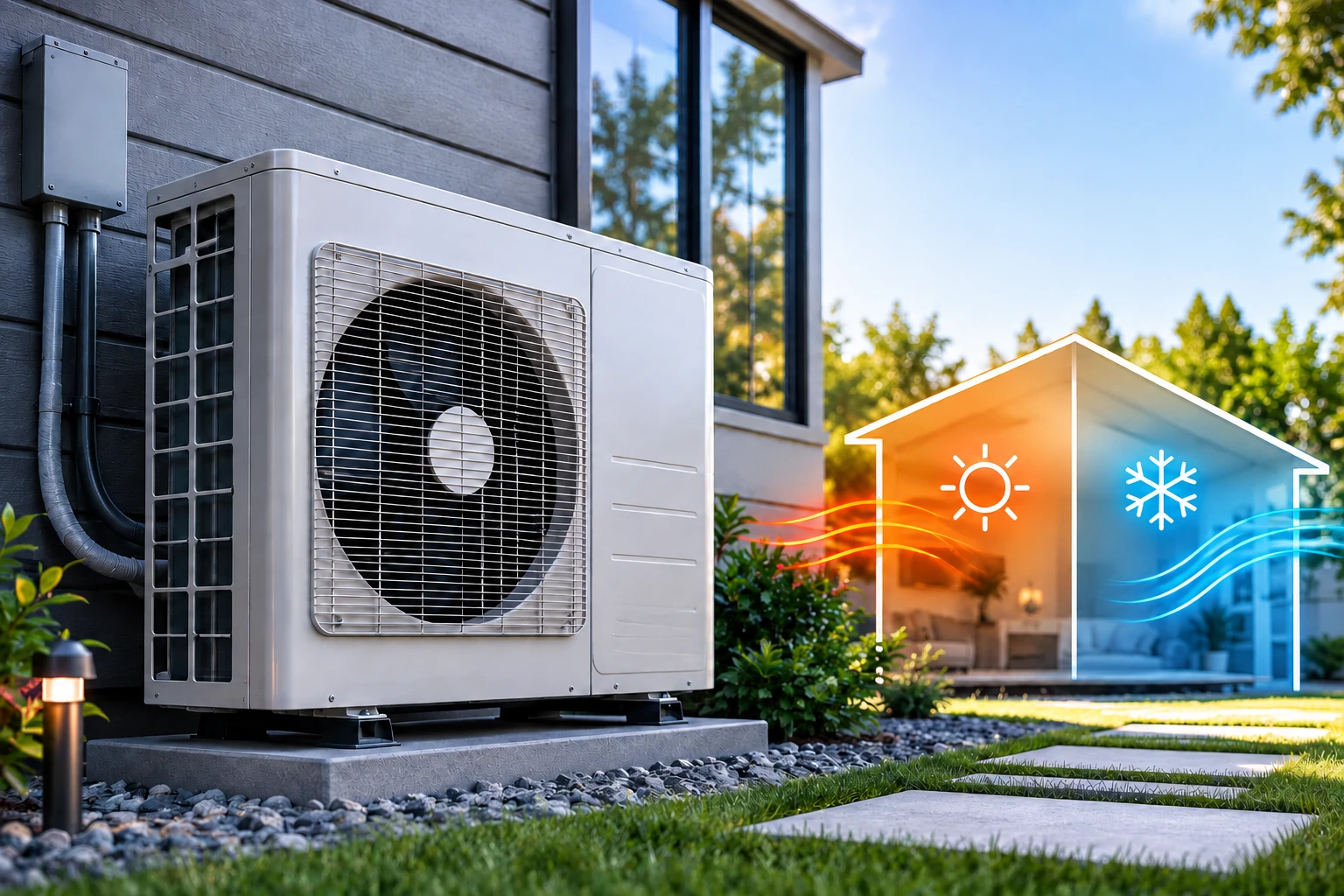
When an AC or furnace fails, the easy move is to replace it with the same type of equipment. But a heat pump does both jobs — cooling in summer, heating in winter — in a single outdoor unit, which is why it's become the default recommendation for LA homes replacing aging or mismatched systems. Here's what you actually gain by making the switch.
1. One system instead of two
A heat pump replaces your AC and furnace with a single piece of equipment. That means one system to maintain, one filter to change, and one unit taking up space in your attic, closet, or side yard — instead of two aging systems failing on two different schedules.
2. Lower monthly bills
A heat pump moves heat instead of generating it by burning gas, which makes it 2–4× more efficient than a gas furnace. In LA's mild climate, a heat pump typically runs at a coefficient of performance (COP) of 3–4 — meaning every $1 of electricity moves $3–4 worth of heat into your home. Most homeowners see a noticeable drop in winter heating costs, and cooling costs are comparable to or better than a modern high-SEER2 AC.
3. LA's climate is close to ideal for heat pumps
Cold-weather performance is the biggest hesitation homeowners bring up, but it rarely applies here. Modern cold-climate heat pumps maintain full heating capacity down to about 5°F outdoor air temperature — LA's coldest winter mornings (typically 38–45°F) are mild by comparison, so the system almost never has to work near its limits.
4. Thousands of dollars in stackable rebates
Heat pumps currently qualify for the deepest rebate stack of any HVAC equipment. Income-qualified households can combine HEEHRA (up to $8,000), TECH Clean California ($1,000–$3,000), a LADWP (up to $2,000/ton) or SCE ($500–$2,000) utility rebate, and the Federal 25C tax credit (up to $2,000) — often $8,000–$10,000+ off the installed cost. Even non-qualified households typically offset $3,000–$5,000 through TECH Clean, the utility rebate, and 25C. See our full rebates page for current numbers.
5. Quieter than what you have now
Modern inverter-driven heat pumps run at variable speed rather than cycling on and off at full blast, which makes them noticeably quieter — typically 50–58 dB at the outdoor unit, close to the hum of a refrigerator. Most homeowners find them quieter than the AC or furnace they're replacing.
6. No combustion, no gas leaks, no carbon monoxide risk
Because a heat pump runs entirely on electricity, there's no gas line, no combustion, and no carbon monoxide exposure to plan around. That also means one less appliance tied to gas utility price swings.
7. Long service life with simple maintenance
A well-installed heat pump with annual maintenance typically lasts 15–20 years — in line with a good AC or furnace, but for one system instead of two.
What to check before you upgrade
Heat pumps draw more amperage than a gas furnace, so we check your electrical panel capacity during the free consultation — if a panel upgrade is needed, it's often partially covered by the same rebate programs. We also run a Manual J load calculation to size the system correctly rather than guessing off your old equipment's tonnage. See our heat pump installation page for our full process and current pricing.
Ready to get started?
Free in-home consultation with any new or replacement HVAC system, or any service / repair over $200. We answer the phone 24/7.